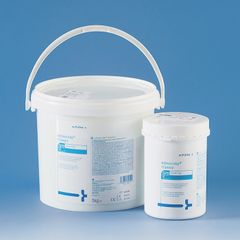
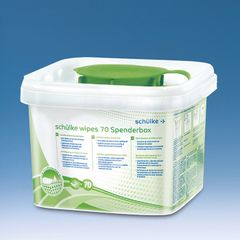
Gentle to materials: The special formulation of active ingredients achieves optimum clean-ing results even at low tempera-tures, brief soaking times and low alkalinity. Glass surfaces and graduations will last longer. Safe on tests: Detergents and disinfecting detergents can be removed without residue. Thus, even sensitive tests in haema-tology, serology, microbiology and enzymatic analytical chemistry are not affected. Simply observe the recommended concentrations and rinse thoroughly with water. Cost efficient: Normally soiled instruments will become clean when using the recom-mended concentration of detergent. For heavy soiling, it is recommended to heat the solution within the indi-cated limits. However, an excessively high concentration will not increase the cleaning performance. Environmentally friendly: All BRAND detergents and disinfecting detergents conform to current legis-lation and regulations. They are free from formaldehyde, and contain biodegradable surfactants and other ingredients that are not harmful to the environment. Phosphate content is considerably reduced. User-friendly: Our cleaners and disinfecting cleaners have a very broad spectrum of acti-vity. Therefore, only a small number of products are needed for a great variety of procedures. These cleaners and disinfecting cleaners do not contain caustic alkali. This is why they are particularly gentle to material, and are fully effective even in hard water. Gentle to skin: Within the recommended concen-tration, detergents and disinfecting detergents are generally recognized as safe and gentle to skin.
Manual and Machine Cleaning
Glass and plastic labware can be cleaned manually, in an immersion bath, or in a laboratory washing machine. Labware should be cleaned immediately after use – at low temperatures, with brief soaking times, and low alkaline detergents. Labware which has come into contact with infectious substances should first be cleaned and, if necessary, autoclaved. This is the only way to prevent baking-on the substance, and subsequent damage to the labware by any adhering chemical residues. Note: Carefully disinfect labware before cleaning when there is a risk of injury during cleaning procedure. Gentle Cleaning: For gentle treatment of labware, clean immediately after use – at low temperatures, with brief soaking times, and at low alkalinity. Glass volumetric instruments should not be exposed to prolonged immersion times in alkaline media above 70 °C, as such treatment might cause volume changes through glass corrosion, and destruction of graduations. Information: At 70 °C, a 1N sodium hydroxide solution will corrode a layer of approx. 0.14 µm off the surface of borosilicate glass 3.3 (Boro 3.3) within 1 hour. However, at 100 °C, a layer of 1.4 µm, or tenfold more, will be removed. Therefore, cleaning temperatures above 70 °C should be avoided and low alkaline cleaning agents are preferrable.
Basic information
Wiping and scrubbing method: The generally accepted wiping and scrubbing method with a cloth or sponge soaked in cleaning solution is the most popular cleaning method. Labware must never be treated with abrasive scouring agents or pads which might damage the surface. Immersion method: For the immersion method, labware is soaked in the cleaning solution for 20 to 30 minutes at room temperature, then rinsed with tap water, and finally with distilled water. Only for stubborn residues should the soaking time be extended and the temperature increased. Ultrasonic bath: Both glass and plastic labware may be cleaned in an ultrasonic bath. However, direct contact with the sonic membranes must be avoided. Machine cleaning: Machine cleaning with a laboratory washing machine is more gentle to labware than cleaning in an immersion bath. The labware is only exposed to the cleaning solution for the relatively short flushing periods when sprayed by the jet or injector nozzles. Lightweight objects will not be tossed and damaged by the jet if they are secured in washing nets. Labware is protected against scratching when the wire baskets in the washing machine are plastic coated. Glass labware: With glass labware, prolonged immersion times in alkaline media above 70 °C should be avoided. Such treatment, particularly with volumetric instruments, might cause volume changes through glass corrosion, and destruction of graduations. Plastic labware: Plastic items generally have smooth, non-wetting surfaces and can usually be cleaned effortlessly under low alkalinity conditions. Polystyrene or polycarbonate labware, e.g., centrifuge tubes, must only be cleaned manually with neutral detergents. Prolonged exposure even to low alkaline detergents will impair their strength. The chemical resistance of these plastics should be verified in each case. Cleaning in trace analysis: To minimize metal traces, immerse labware in 1N hydrochloric acid. For extreme demands, boil glass labware in 1N nitric acid for approximately 1 hour as a second step. Plastic labware should not be boiled but may be immersed in nitric acid at room temperature. The maximum immersion time should not exceed 6 hours. Nitric acid is a strong oxidation agent and can cause brittleness in many plastics. Finally, rinse thoroughly with distilled water. To minimize organic traces, clean labware with alkalis or solvents (e.g., alcohol). Subsequently, immerse in 1N hydrochloric acid, then rinse thoroughly with distilled water.