Handling of graduated and mixing cylinders
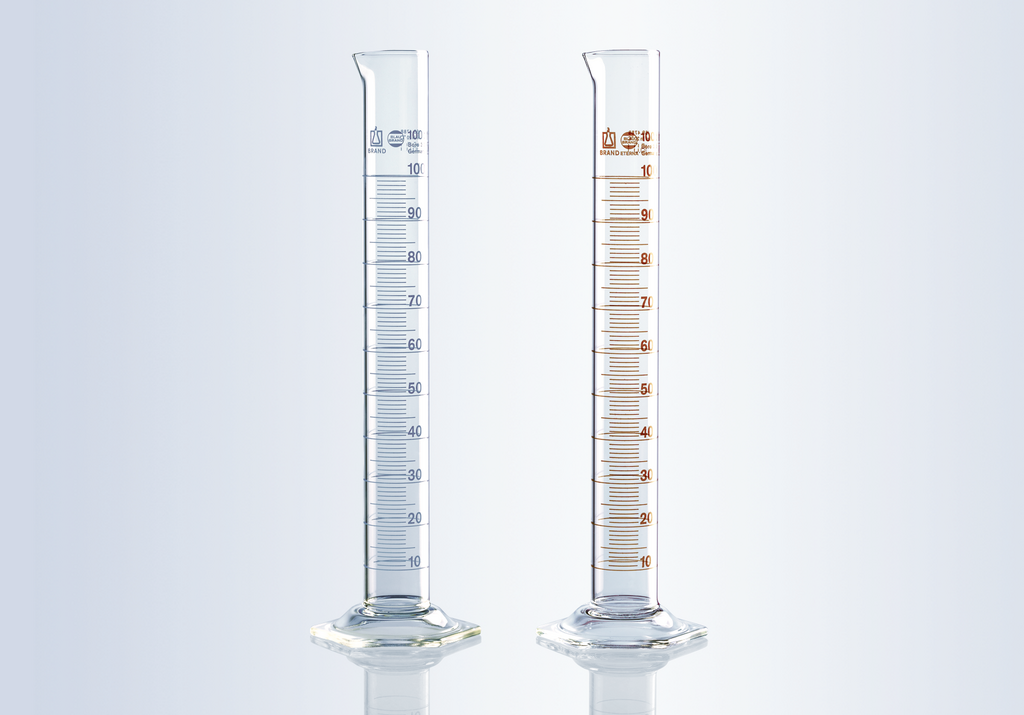
What are graduated cylinders?
Graduated cylinders are graduated volumetric instruments used to measure different volumes of liquids. They have a cylindrical shape with a spout at the top, a base at the bottom, and a volume scale that allows the liquid volume contained to be read. Graduated cylinders are generally calibrated to “In” (TC = to contain) and can be made of glass or plastic. Due to their relatively large cross-section, their measurement accuracy is lower than that of volumetric flasks, for example.
How to work with graduated cylinders
1. Fill with liquid.
2. Set the meniscus to the required mark (read at eye level!)
3. The wall of the cylinder must not be wetted above the mark.
4. The indicated volume is the amount of liquid contained.
 Note:
Note:
BRAND product examples of graduated cylinder


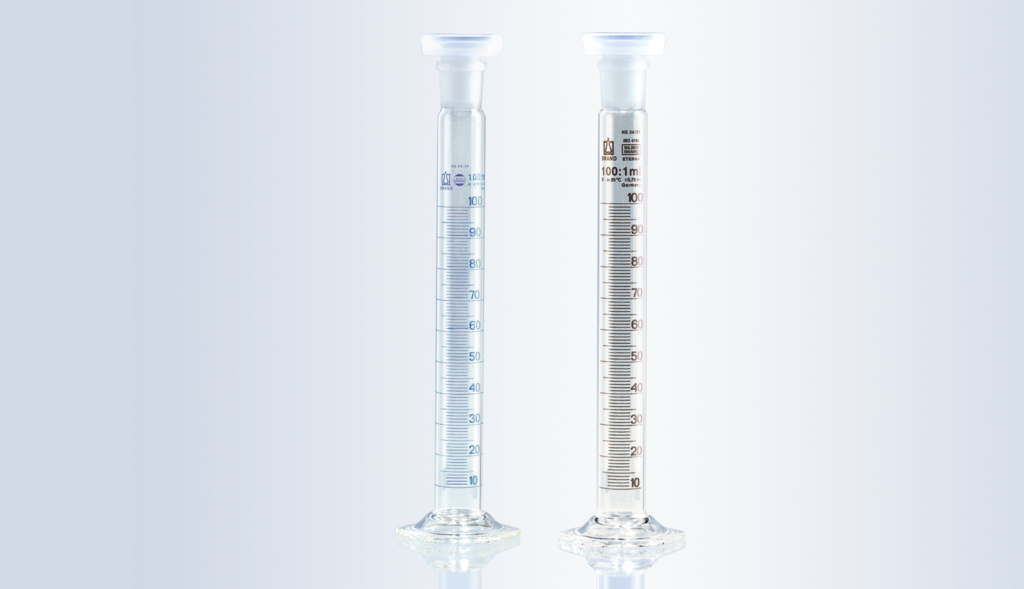
What are mixing cylinders?
Mixing cylinders are essentially designed like graduated cylinders. They have a cylindrical shape, a base at the bottom, a volume scale calibrated to “In”, and are made of glass. Unlike conventional graduated cylinders, they do not have a spout at the top but a ground-glass joint. A stopper can be inserted, allowing the liquids inside to be safely mixed by shaking or repeatedly inverting the mixing cylinder.
Note:


